Pull two live market trackers this month and you get two different cities. One, refreshed from MLS data as of mid-August 2026, puts Fort Myers's median sale price at $348,000, down more than six percent from a year ago, homes taking roughly two months to go under contract, a market tilted toward buyers. Another, built on the same underlying MLS feed but isolating single-family homes and reporting on June 2026 closings, puts the median above $420,000, with inventory tight enough to call it a seller's market. Neither number is wrong. They're measuring different things. The first blends in the condos, attached homes, townhomes and manufactured housing that make up roughly half of what actually changes hands in Fort Myers. The second strips all of that out and looks only at detached single-family homes, which is the category almost every waterfront property falls into.
That gap matters if you're comparing Fort Myers to Cape Coral or Bonita Springs on a spreadsheet. It matters less once you're the one standing in front of a specific house on a specific canal, because neither median has ever met your seawall.
What the Median Can't See
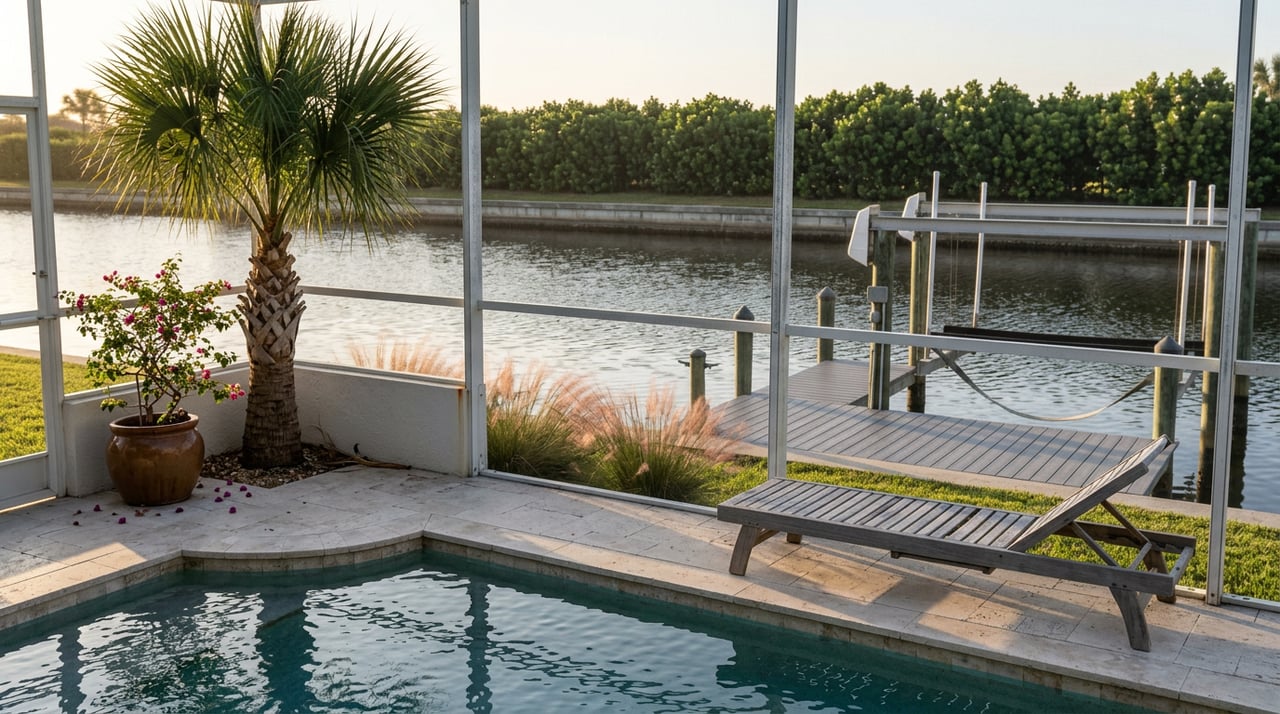
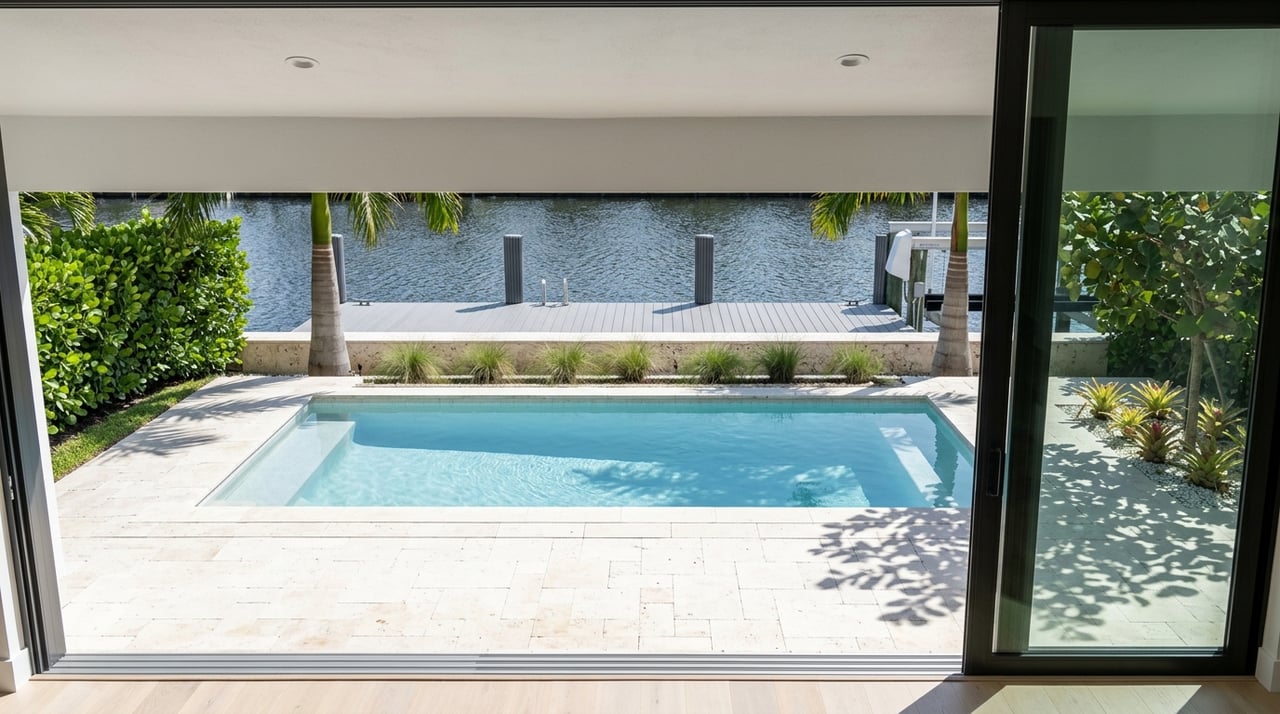
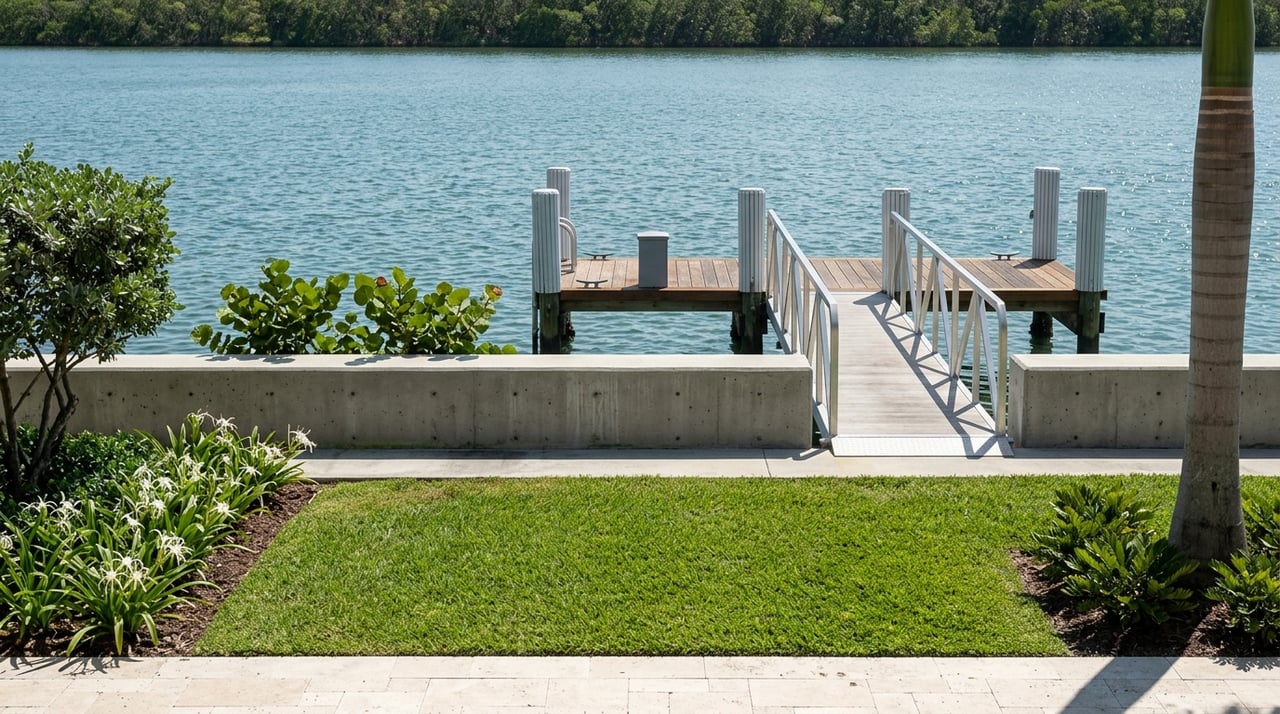
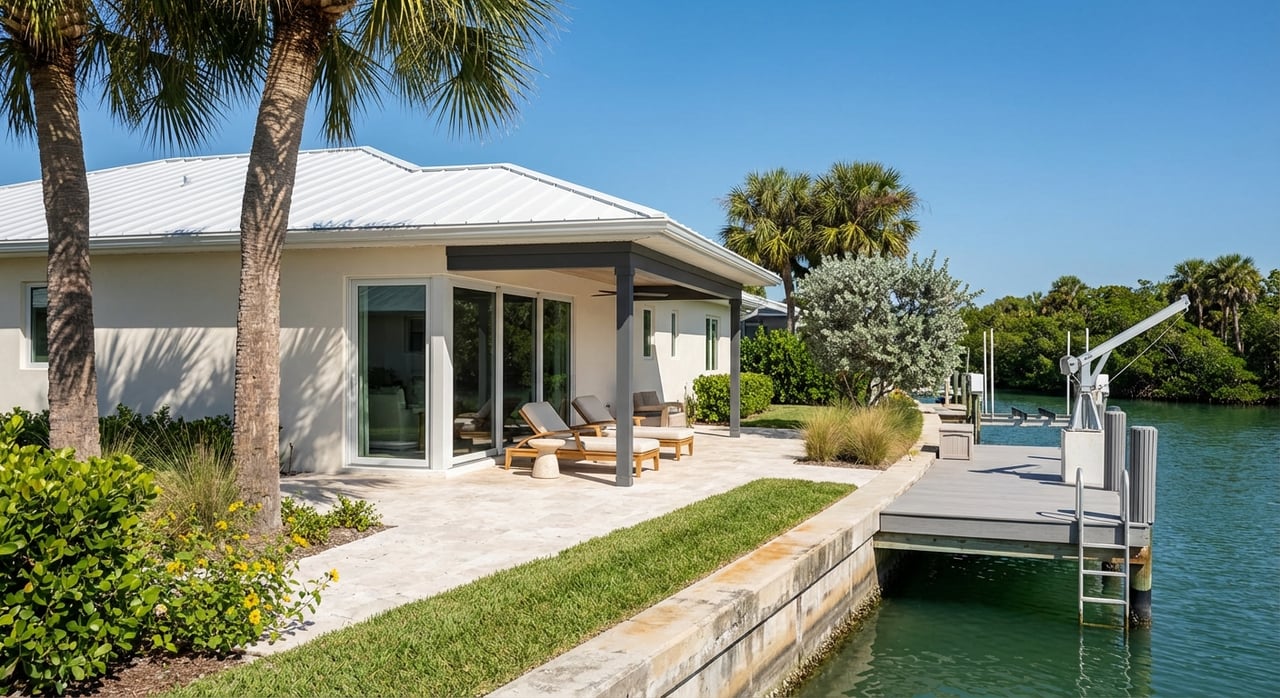
A citywide number, however carefully sliced, treats every parcel of waterfront the same. It doesn't know whether the property sits on the Caloosahatchee itself, tucked into a quiet canal off Iona or Cypress Lake, or fronting one of the 1920s-era lots along McGregor Boulevard where seawalls have been rebuilt more than once in the last century. It doesn't know whether the wall behind the house was poured last year or has been quietly losing backfill since the Reagan administration.
For a waterfront buyer or seller in Fort Myers right now, that's the number that actually decides how the transaction goes. Not the median. The wall.
What the Four-Point Inspection Doesn't Cover
Most Florida buyers know the drill on a standard home inspection and the four-point insurance inspection that goes with it: roof, electrical, plumbing, HVAC. What that pairing does not touch is the structure sitting between the house and the water. A seawall failure shows up nowhere on a four-point form, and a general home inspector isn't trained to climb down and evaluate cracking at the cap, leaning panels, or soil settlement behind the wall, the same signs a marine or structural engineer is trained to look for.
That gap is exactly why waterfront due diligence in Lee County typically runs on two separate tracks: a standard inspection for the house, and a marine or structural engineer's report for the seawall, dock, and lift. Skip the second one and you've inspected a house that happens to sit next to water you know nothing about.
One Wall, Two Front Doors
Here's the part that catches people off guard mid-contract. Depending on where a Fort Myers property actually sits, a seawall repair or replacement permit doesn't always go through the same office. Properties inside Fort Myers city limits route through the City of Fort Myers building department. Properties in the surrounding unincorporated areas route through Lee County's Community Development Department instead. And if the wall sits directly on the river or in a tidal canal, as much of Fort Myers's waterfront does, the Florida Department of Environmental Protection and the U.S. Army Corps of Engineers can both have a say before a shovel goes in the ground.
None of that shows up on a listing sheet. It shows up when a buyer's engineer flags a wall issue during the inspection period and someone has to figure out, quickly, which agency's queue that repair permit needs to sit in before closing can move forward. In a market where homes are already taking roughly two months to go under contract, a permit routed to the wrong desk is the kind of delay that eats an inspection period alive.
What Hurricane Ian Left in the File
Fort Myers's seawall stock is not uniform, and that unevenness traces directly back to storm history. The McGregor Boulevard corridor and the Iona area took some of the heaviest seawall damage in the city when Hurricane Ian came through in September 2022. Marine contractors who've worked that stretch of the Caloosahatchee since have documented the kind of damage that doesn't always announce itself at closing: tiebacks that failed and let a cap slowly rotate toward the canal, fixed with helical anchors installed through the cap rather than a full excavation. Voids behind a wall that opened up from Ian's storm surge, filled with polyurethane injection and documented for an insurance adjuster after the fact. A routine pre-hurricane-season inspection that sent a diver underwater and turned up voids the homeowner had no idea existed.
Nearly four years out from the storm, engineers are still finding damage that didn't surface right away. A wall can look fine from the yard and still be carrying damage from 2022 that only shows up on a diver's inspection or a core sample. That's not a reason to assume every Fort Myers seawall is compromised. It's a reason to treat "looks fine" and "documented fine" as two different claims.
The New Seawall as a Selling Point
Sophisticated sellers already understand this, and some are pricing around it directly. One riverfront lot on the market this year in Fort Myers is being marketed specifically on the strength of a brand-new seawall with an upgraded, higher bulkhead, with the listing language pointing out that a buyer can skip the lengthy permitting process entirely because the wall is already built and approved. That's not a decorative detail. It's the seller telling you, in plain language, that a fresh permitted seawall removes a specific piece of friction buyers would otherwise have to price in themselves.
Read that in reverse and you get the negotiating leverage on the other side of the table. A property with an aging, unpermitted, or undocumented wall is not just a maintenance question. It's a line item a buyer's lender and appraiser will both want answered. As cash buyers make up a smaller share of Fort Myers sales than they did at the peak, more transactions are running through appraisers who explicitly weigh seawall condition, dock permits, canal type, and storm repair history when comparing waterfront sales to each other. A missing permit file doesn't just slow the buyer down. It can slow the loan down too.
Before You Write the Offer
If you're already deciding between waterfront properties in Fort Myers rather than deciding whether to buy at all, the sequence that protects you is straightforward:
- Pull the permit and inspection history for the seawall, dock, and lift directly from the relevant building department, not just the home itself, before your inspection period starts running.
- Confirm whether the property falls under City of Fort Myers or Lee County jurisdiction for permitting purposes. It changes who you call if something needs fixing before closing.
- Ask whether the wall fronts the river or a tidal canal. If it does, factor in that FDEP or Army Corps review can extend a repair timeline well past a typical thirty-day close.
- Order a marine or structural engineer's report as a separate line item from your standard inspection. It is the only report actually scoped to catch what a four-point inspection is not designed to see.
- If a listing highlights a new seawall, ask for the permit and completion documentation, not just the seller's word. A permitted wall and a wall that was simply built are not the same asset.
A Few Straight Answers
Does a brand-new seawall mean I can skip the engineer's report? No. New construction still benefits from a review confirming it was built to permit and inspected at completion. What a documented new wall does is shorten the list of open questions, not eliminate the need to verify them.
Who do I actually call to check permit history before making an offer? Start with whichever building department has jurisdiction over the parcel, City of Fort Myers or Lee County, and cross-reference the address in the Lee County Property Appraiser's public records. Both will show recorded permit activity tied to the property.
Does seawall condition really move insurance costs, not just repair costs? Yes. Lenders and insurers increasingly treat documented seawall condition as part of the underwriting picture for waterfront property, alongside flood zone and elevation certificate, which means an undocumented wall can affect financing timelines even before it affects your wallet.
None of this is a reason to avoid Fort Myers waterfront. It's a reason to treat the wall the way you'd treat any other structural system, with its own paperwork, its own inspection, and its own place in the negotiation. The homes worth owning along the Caloosahatchee tend to be the ones where that paperwork already exists.
If you're comparing specific Fort Myers waterfront properties and want a second set of eyes on what the seawall file is actually telling you before you write an offer, Jodi Hanson works this market from both the design and the numbers side. Get Access to Our Private Listings and start with the properties that already have their paperwork in order.