Thinking about rebuilding or starting new construction on Fort Myers Beach? You are not alone. The island is still in a recovery cycle, and today’s buyers and owners are weighing whether to purchase a newly built elevated home, rebuild on an existing lot, or acquire an already elevated property. In this guide, you will learn the rules that drive those decisions, what timelines to expect, how insurance and rentals factor into returns, and how to set up a smooth path from offer to certificate of occupancy. Let’s dive in.
Start with parcel-level checks
Before you run numbers or sketch designs, confirm the fundamental constraints on the specific property. These items decide whether your project is a light repair or a full rebuild.
Confirm flood zone and BFE
Look up the property in the official FEMA Flood Map Service Center to verify the flood zone and Base Flood Elevation (BFE). In V and Coastal A zones, most homes must sit on open pile or column foundations. That affects cost, design, and how you can use the ground level. Start with a quick map search on the FEMA Flood Map Service Center.
Pull elevation and SI/SD paperwork
Ask the seller for an Elevation Certificate and any Town letters that reference substantial damage or improvements. These documents guide permitting and insurance and help you avoid surprises after you go to contract. If you are planning a rebuild, confirm early how the Town will apply the substantial improvement/substantial damage rules during review.
Use the Town permit portal
Fort Myers Beach manages permits, plan review, and inspections through its IWorQ system. You will submit applications, track corrections, and schedule inspections there. Review current procedures on the Town’s Building Services page before you set expectations for design, fees, or lead times.
Understand the 50% rule
The Town enforces the NFIP substantial improvement/substantial damage requirement, often called the 50% rule. If the cost to repair or improve a structure equals or exceeds 50% of the building’s pre-damage market value, the building must be brought into compliance with current floodplain standards. In practice, that can require elevating the structure to the required flood protection level or rebuilding on piles.
Local reviewers rely on appraisals, contractor cost breakdowns, and elevation certificates to make determinations. For deeper background and standard methods, see FEMA’s technical guidance on SI/SD determinations in the FEMA Building Science publications.
Elevation standards on Estero Island
If you build new or your project triggers the 50% rule, Fort Myers Beach requires your lowest floor to be at least BFE plus 1 foot of freeboard. This local freeboard raises the protection level and often improves flood insurance outcomes for elevated homes. Review the Town’s elevation guidance in its public FAQ on elevation requirements.
Design and construction in coastal zones
Coastal structures must handle both water and wind. That affects foundations, walls, connections, and how you place mechanical systems.
Open foundations and breakaway walls
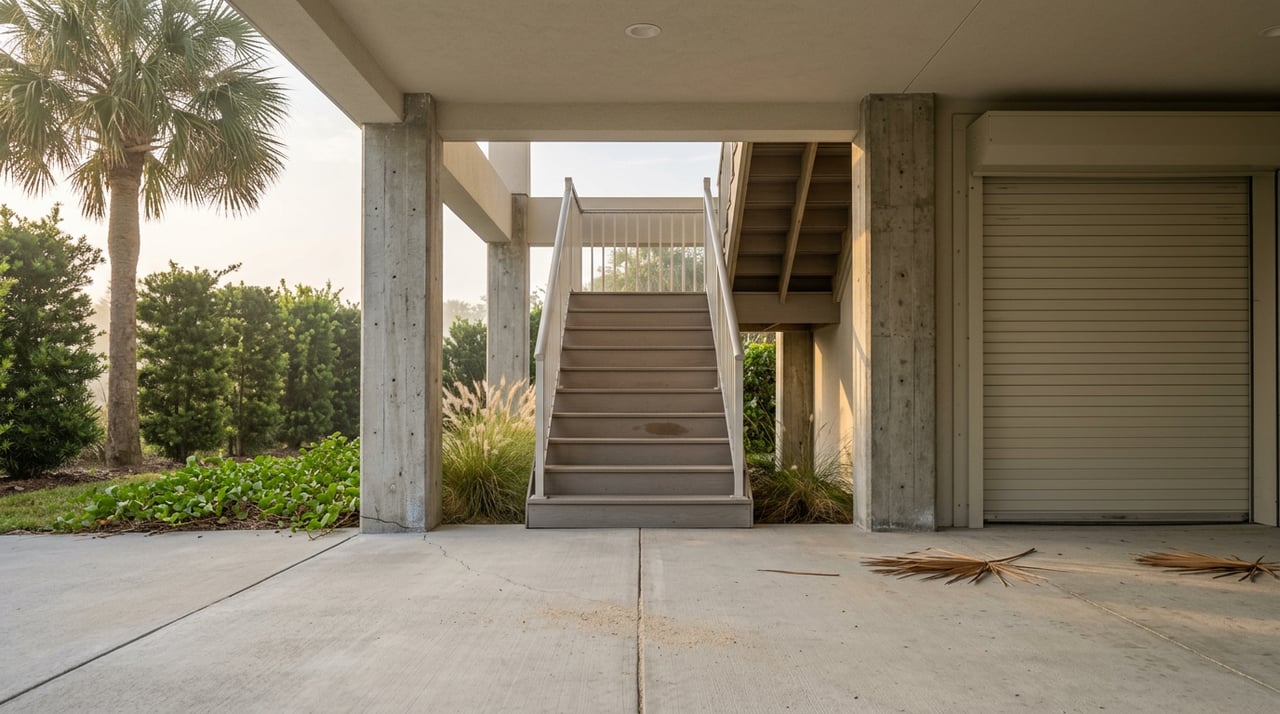
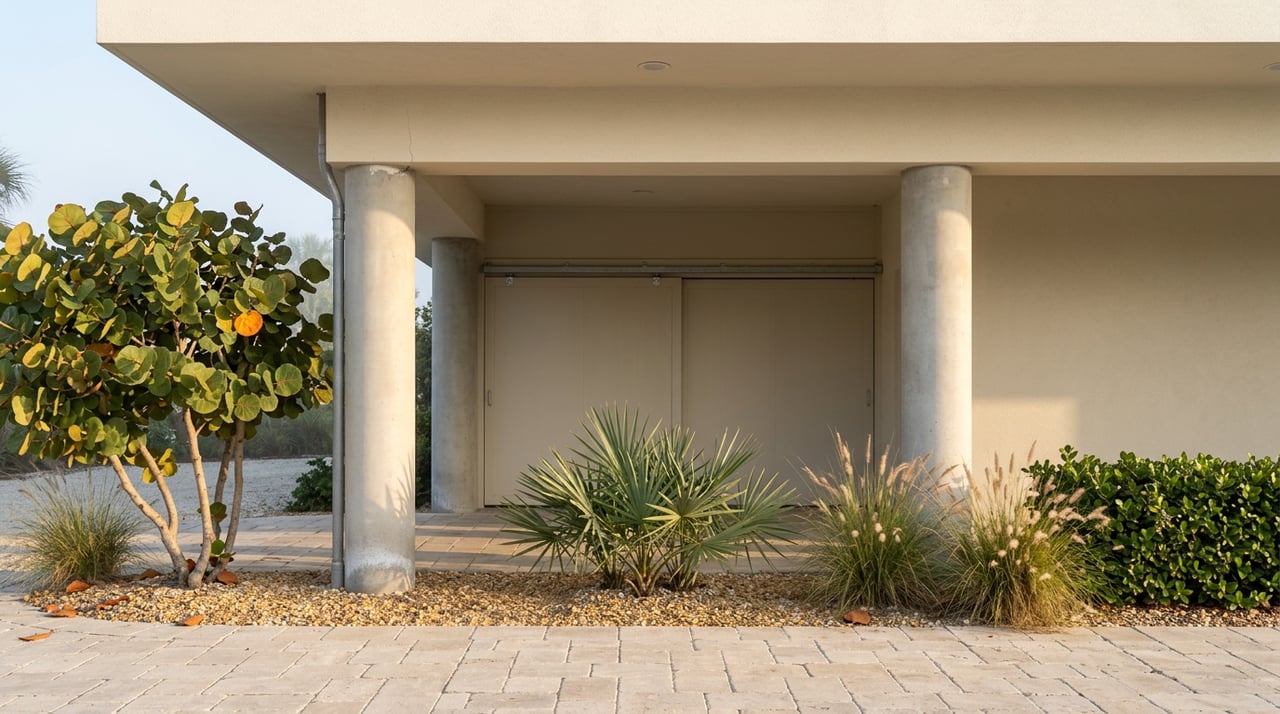
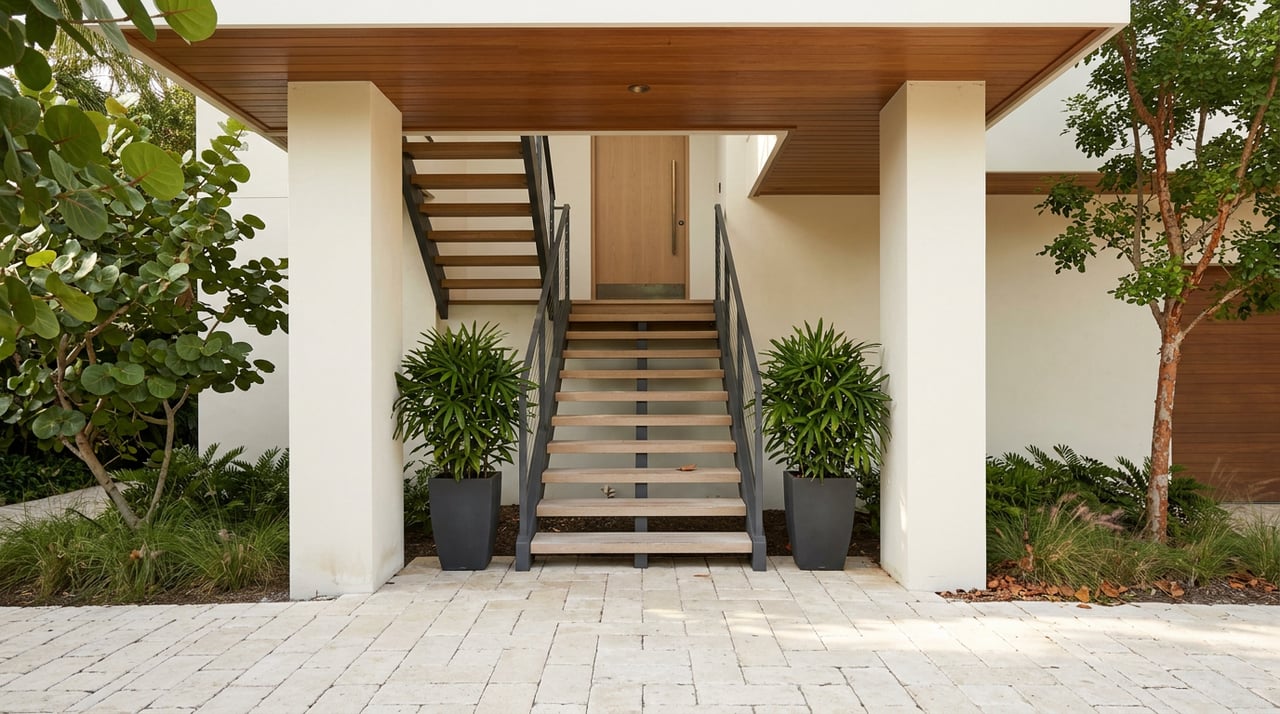
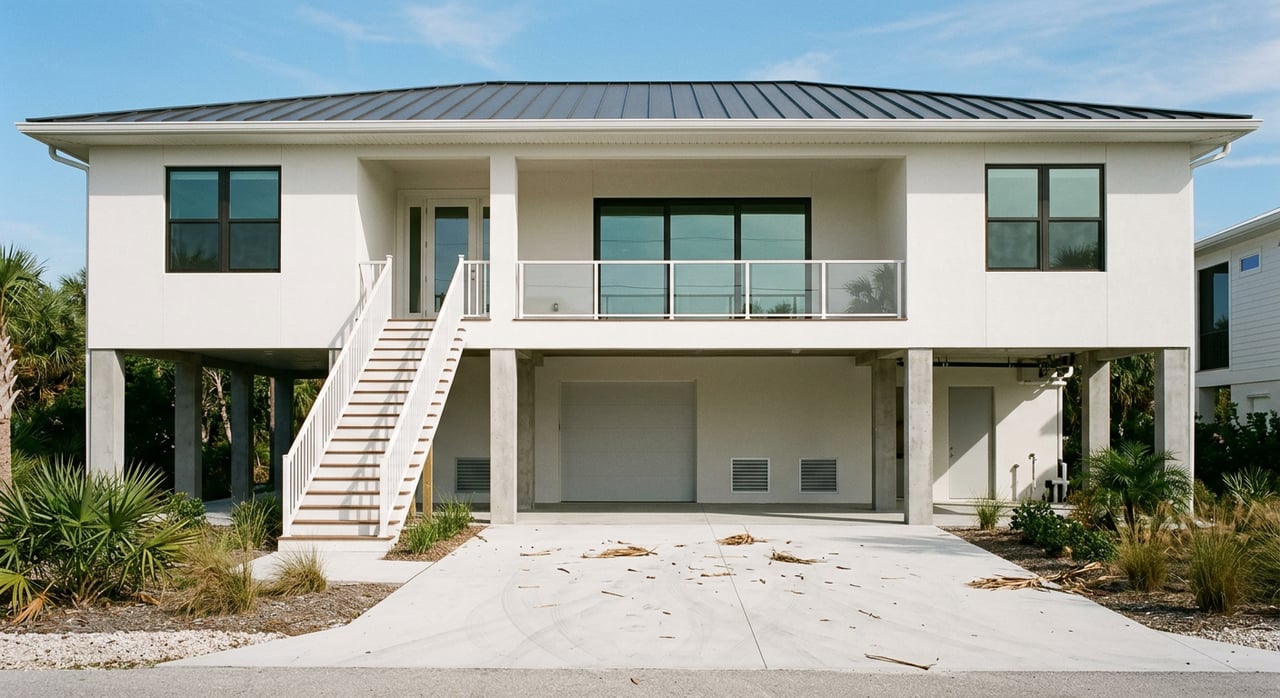
In V and Coastal A zones, you will typically rebuild on piles or columns so waves and scour can pass below the home. Any enclosed space below the living level is limited in use and must meet flood-damage-resistant construction standards. Where used, breakaway walls must be engineered to fail without compromising the elevated structure. For a plain-language overview of these details, see FEMA’s guide to breakaway walls.
Utilities and the “lowest floor”
Floodplain rules treat the lowest floor differently in A versus V zones. In V zones, measurements often reference the bottom of the lowest horizontal structural member because of the open foundation. Plan to elevate HVAC, electrical, and water heaters above the required protection level or design them for flood resistance and post-storm serviceability. Your design team will coordinate these placements early so you can price platforms, chases, or rooftop equipment correctly.
Florida Building Code 2023
All new work must comply with the current Florida Building Code, now the 8th Edition (2023). Submittals need to cite the correct edition and reference required product approvals for coastal assemblies. You can review state resources and code links at the Florida Building Code portal.
Permits and schedule: what to expect
Timelines are a mix of statutory limits, local review queues, and coastal construction realities. Set your plan around complete submittals and realistic build durations.
Permitting basics
Florida law requires that a single-family permit be issued within 30 working days of a complete application unless unusual circumstances apply. That is issuance after a complete submittal, not a guarantee for first-round approval if your plans need corrections. You can read the statute that governs this timeline in Florida law on permit issuance. Fort Myers Beach processes permits and inspections through its online system; check the Town’s Building Services page for procedures, stormwater submittals, and private provider options.
Construction duration ranges
Typical single-family builds often complete in roughly 6 to 12 months once site work starts, with complex custom homes taking longer. Coastal factors like geotechnical borings, pile driving, breakaway wall detailing, and hurricane-rated product lead times can extend construction. Use 9 to 18 months as a planning range from design and permitting to certificate of occupancy for a full elevated rebuild or new home on piles. For national benchmark context on build durations, see this overview of how long it takes to build a house.
Insurance and financing: what moves the numbers
Flood insurance and lending terms can improve when you elevate correctly and document the details.
Risk Rating 2.0 and elevated homes
FEMA’s Risk Rating 2.0 prices policies by property-specific risk factors, including first-floor height and distance to water. Elevated homes often see meaningfully lower premiums than low-lying pre-FIRM structures, especially when you provide accurate elevation data. Learn how the program prices risk in FEMA’s summary of Risk Rating 2.0. Ask your insurance agent for side-by-side quotes for the current structure versus an elevated rebuild so you can compare long-term carrying costs.
Increased Cost of Compliance (ICC)
If a property is substantially damaged by flooding, NFIP policies may include ICC benefits that help pay to elevate, floodproof, or demolish and rebuild. ICC is claim-triggered and subject to program limits and eligibility rules. You can review how ICC works in FEMA’s training overview of ICC coverage. Lenders in Special Flood Hazard Areas will also require flood insurance and may ask for elevation certificates and details on pile foundations during underwriting.
Short-term rentals: rules and potential
Fort Myers Beach allows short-term rentals but requires registration, local contact information, and compliance with a Code of Conduct. A weekly versus monthly zoning map determines how often you can rent in different areas, which is critical to revenue modeling. Registration runs through the Town’s designated platform and includes fire-safety checks and tax obligations. Review the Town’s Short-Term Rentals page and verify a specific parcel’s rental designation before you underwrite.
Which path fits your goals?
You have three primary choices: buy a newly built elevated home, rebuild on your lot, or buy an existing elevated property. Here is how each path tends to play out.
Buy a newly built elevated home
You get immediate use, current code compliance, and often better insurance pricing. New construction in strong tourist corridors can command a premium, but rising inventory in the broader 2025–2026 market gives you room to negotiate. Focus due diligence on elevation certificates, product approvals for windows and doors, and documentation of final inspections.
Rebuild on your lot
This path can optimize your design, floor height, and insurance outcomes. It requires more time and coordination, especially with piles, stormwater submittals, and possible shoreline or seawall work. Budget for geotechnical work, engineered connections, and the town’s BFE plus freeboard requirement, then set a realistic 9 to 18 month plan for design, permitting, and construction.
Buy an existing elevated home
An elevated home with proven insurance and rental history can balance speed and long-term cost control. Verify the as-built elevation, confirm flood openings and any breakaway walls, and review permit history in the Town portal. If you plan to rent, confirm the parcel’s weekly or monthly designation and complete STR registration.
Your action checklist
- Verify flood zone and BFE in the FEMA Map Service Center. Save a copy of the FIRM panel for your records.
- Request the property’s Elevation Certificate and any Town substantial-damage or substantial-improvement letters. These documents shape both permitting and insurance.
- Align your scope with the 50% rule. If you cross the threshold, plan to elevate to at least BFE plus the Town’s freeboard.
- Engage a coastal-experienced engineer and architect familiar with pile foundations, breakaway walls, and flood-resistant mechanical design.
- Map your permit and build timeline. Use the Town’s Building Services page for submittal requirements and schedule checks.
- If you plan STR income, confirm eligibility and registration steps via the Short-Term Rentals page. Bake any inspections, fees, and compliance costs into your pro forma.
- Get insurance quotes for current conditions and a post-elevation scenario. Ask your lender about documentation needed for construction draws and final approval.
When you have the right parcel data, the decision between buying new, rebuilding, or acquiring an elevated existing home becomes much clearer. If you want a disciplined plan that blends code, design, and investment logic, connect with a local advisor who works this process every week. To discuss strategy, off-market options, and builder introductions, reach out to Jodi Hanson.
FAQs
What is the 50% rule on Fort Myers Beach?
- If repair or improvement costs reach 50% or more of a building’s pre-damage market value, the Town requires compliance with current floodplain standards, which can mean elevating or rebuilding. Review FEMA’s SI/SD guidance in the Building Science publications and confirm local application with Town staff.
How high must I elevate a new or substantially improved home?
- The Town requires the lowest floor to be at least BFE plus 1 foot of freeboard. See the Town’s summary in its elevation FAQ and confirm measurements for your zone and design.
How long do permitting and construction take for a rebuild?
- Florida law targets permit issuance within 30 working days of a complete application, and coastal new builds often run 9 to 18 months from design through construction depending on complexity. Check the statute on permit timelines and use national benchmarks for build duration as a planning guide.
How does flood insurance pricing change with Risk Rating 2.0?
- Risk Rating 2.0 prices by property-specific risk, so first-floor height and building characteristics matter. Elevated homes can see significantly lower premiums than low-lying pre-FIRM structures. Learn how it works in FEMA’s overview of Risk Rating 2.0 and get property-specific quotes from your agent.
Can I use the ground level for living space in V zones?
- In V and Coastal A zones, ground-level enclosed space is restricted and must be designed to be flood-damage-resistant. Where allowed, breakaway walls must fail under storm forces without harming the main structure; see FEMA’s guidance on breakaway walls for the basics.
What should I check before buying an elevated home for STR use?
- Confirm the parcel’s weekly or monthly designation, STR registration requirements, and fire-safety inspections on the Town’s Short-Term Rentals page. Also review elevation certificates, final permits, and product approvals to validate insurance and code compliance.